



CNC Milling
CNC milling is a subtractive manufacturing process, where material is gradually removed from a larger billet of stock, using a cutting tool to reveal the desired final workpiece. CNC milling differs from manual milling by the incorporation of a computer controller, allowing automation of the part cutting and production process. Automation improves the accuracy, precision, repeatability, and throughput of the machine tool compared to manual machining methods.
Corpus Techna Machining Services
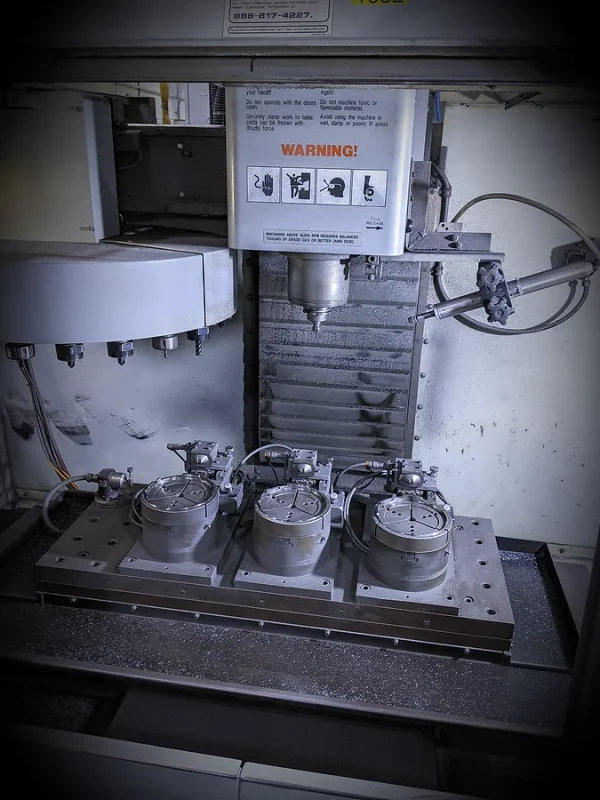
Vertical Milling
Vertical machining centers are among the most prevalent for CNC machining today due to the lower relative machine cost and overall versatility they offer. They can accommodate a broad range of part sizes and geometries; a variety of different work holding options are available and generally chosen based on the type of stock that will be used.
Stock cut from rectangular bar is often held with vises. Custom vise jaws or purpose-built fixtures are commonly used for secondary operations that can’t be readily held or positioned using standard jaws. Chucks can also be employed in a mill, to grip round features or stock for the machining process.
The utility of a traditional 3-axis machine can be enhanced with the use of a rotary indexer, which can precisely rotate a workpiece while the other machine axes are in linear motion. Additional degrees of freedom gained from using a rotary indexer are beneficial as it permits increased part complexity, tighter relative position tolerances can be held, and multiple operations can be combined to increase process efficiency, reducing part costs.
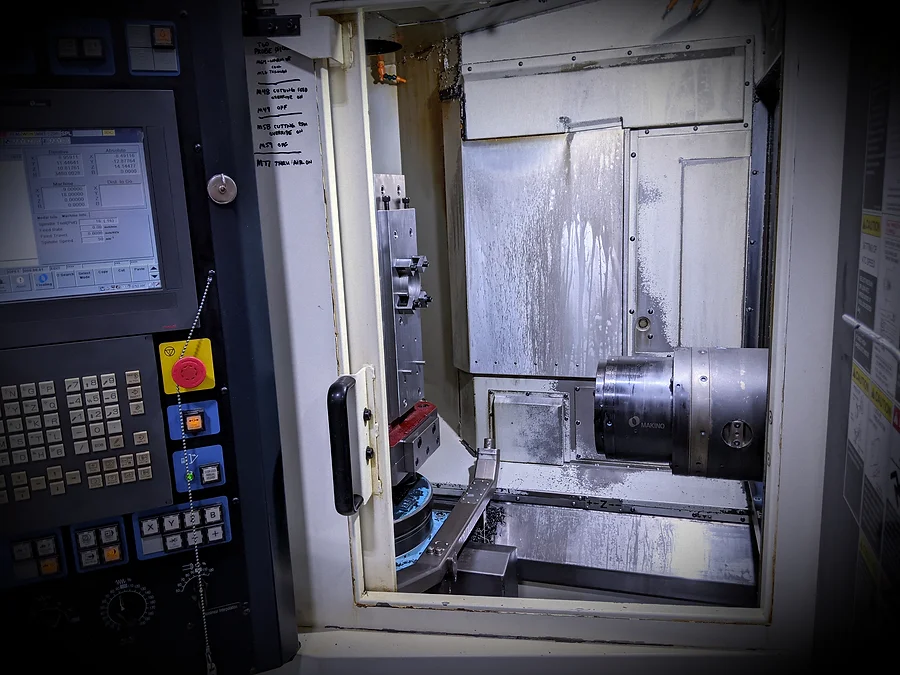
Horizontal Milling
Horizontal mills are often chosen for larger production runs of parts. Machines equipped with multiple pallets or pallet changing systems increase spindle up-time by allowing parts to be loaded and unloaded from an idle pallet while the active pallet is being processed. The increase in machine utilization means more parts can be produced faster.
The spindle orientation of a horizontal mill is beneficial for production machining because the faces being machined are not in the horizontal plane, allowing chips to clear from the machined parts more easily, as they are pulled away by gravity. Less reliance on flood coolant is needed to keep the work piece clear and the machine running. This is especially beneficial when drilling and tapping holes, since metal chips remaining in a drilled hole can frequently result in broken taps or thread-milling tools.
Work holding and fixturing is typically more costly for this type of machine as multiple pallets, each with multiple faces means more total tooling is required to realize the full benefit of a horizontal mill. This higher initial tooling cost makes financial sense for high quantity production runs where the faster machining times will justify the tooling cost over time, allowing a more cost-effective part overall.